

Context
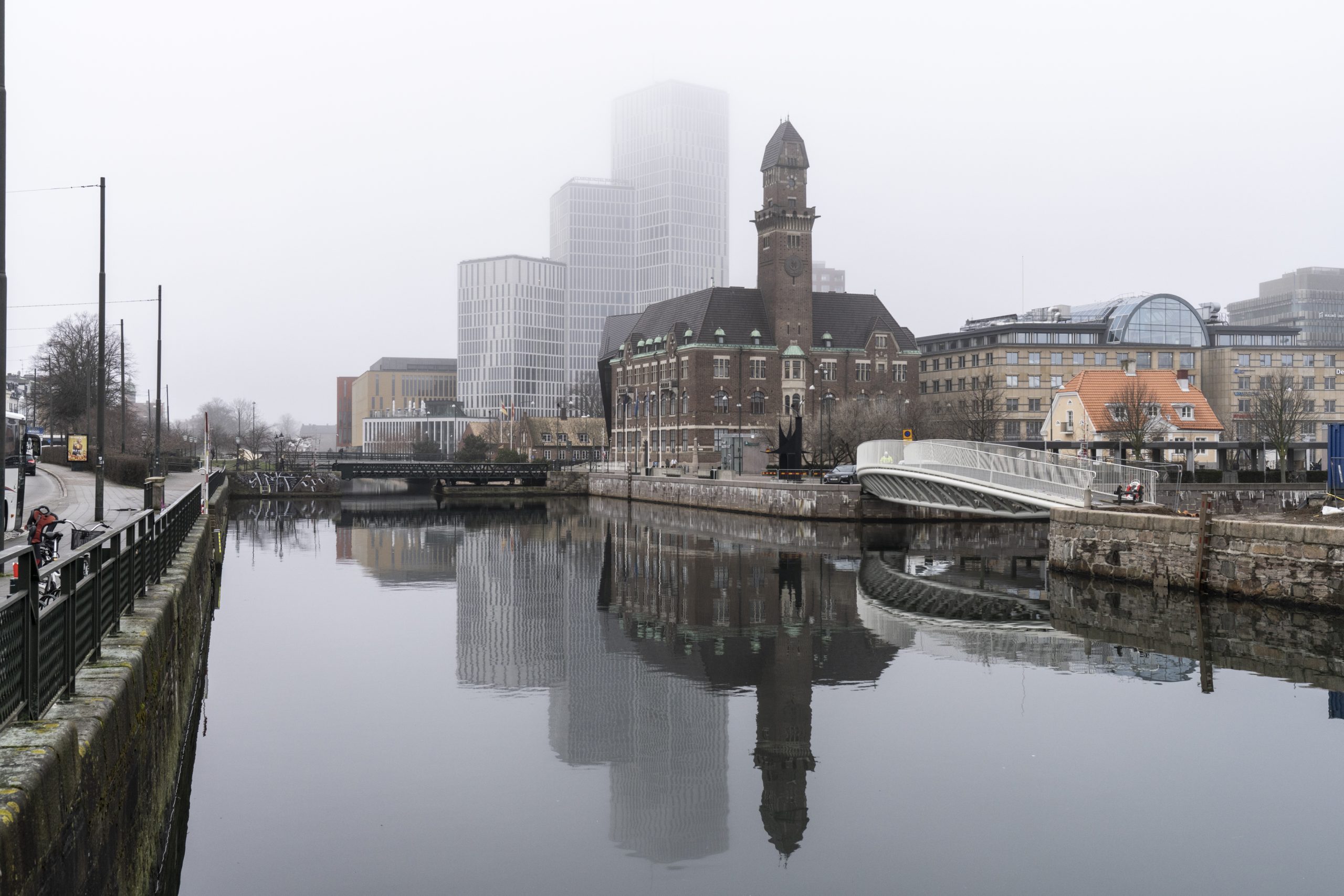
Malmö is a modern, multicultural city in Southern Sweden, overlooking the Øresund strait, as a maritime crossroads in the Baltic Sea. Connected to Denmark by the longest bridge combined with a tunnel in Europe, its cutting-edge design and growing technology sector define the new face of a city with an important industrial past. In the late 1970s, Malmö faced a major recession that hit its once-strong shipbuilding and manufacturing industries hard. When the city’s largest employer shut down in 1986, unemployment surged and many middle-class families left the city. By 1985, Malmö had lost around 35,000 residents. The crisis deepened through the ’80s and ’90s. This marked a turning point: Malmö could no longer rely on heavy industry and began reinventing itself as a hub for culture, design and technology. Over the past 15 years, Malmö’s leaders have carefully crafted a long-term vision to blend its medieval heritage with modern, sustainable architecture. The result is a vibrant city of minimalist design, historic charm, green spaces, and popular beaches. Urban planners from around the world now look to Malmö for inspiration on how to successfully combine tradition, innovation, and sustainability. The “Turning Torso” skyscraper by Calatrava is the symbol of Malmö’s new life.
The case study of the research in Malmö was Rosengård, a low-income public housing neighborhood built between the end of ‘60s and the beginning of ‘70s in the framework of the Million programme, a large-scale public housing project, aimed to provide affordable and modern housing to the growing urban population.
The research began with the assumption that this neighborhood, home to many residents from outside Sweden, would reveal both significant vulnerabilities and strong adaptive capacities.
Stakeholders
This pilot case study brought together a diverse group of stakeholders, from civil society and academia to the private sector and non-profit organizations, to tackle the growing threat of heatwaves in urban areas. At its core, the study focused on how extreme heat impacts the city’s most vulnerable residents, aiming to drive inclusive and informed solutions
The Municipality of Malmõ
Historically, the city of Malmö has focused on preparing its infrastructure for harsh winters. However, with rising temperatures and the growing impact of urban heat islands, the city is now turning its attention to heat vulnerability. The municipality is actively exploring how to integrate heat resilience into urban planning, ensuring that new buildings are designed to withstand higher temperatures and that existing structures can be adapted to meet this emerging challenge. Their goal is to embed heat considerations into the upcoming city plan, with a strong emphasis on protecting vulnerable populations.
The Public Housing Company MKB
A key local partner in the project was the public housing company, a relevant player in Sweden where the responsibility for climate adaptation lies with property owners. With their broad mandate and deep local presence, they were an ideal collaborator. The research protocol was co-designed with the local partner and the Adaptation AGORA team shadowed their community officer, and went door-to-door, speaking with residents to gather firsthand insights into their perceptions and experiences.
Challenges
Nordic countries and Nordic people are used to dealing with extreme cold. Their bodies, the buildings they live in, their cities are prepared for cold. Heat in the Nordics is a recent effect of climate change that local communities were not expecting to face. A challenge to the way Nordic societies have been living so far. This is why urban heat vulnerability, with a focus on engaging vulnerable groups, was the key research topic of the Swedish pilot region. Heatwaves are more frequent and intense, with unequal impacts across neighbourhoods and citizens.
Malmö is leading the way in tackling climate adaptation, setting itself apart by actively involving its citizens in shaping the city’s strategy, including vulnerable groups to shape a heat resilient city. This approach marks a significant shift in Sweden, where urban planning has traditionally followed a top-down, engineering-driven model, relying on strong public trust in institutions rather than public participation. Malmö’s commitment to citizen engagement signals a bold and refreshing change.
Heat preparedness was the key topic of a dedicated webinar of the peer-to-peer learning series. The Municipality of Malmö discussed their plans and actions with the Municipality of Valencia, one of the Adaptation AGORA’s followers.
Participatory pathway
1. General structure
The project’s four pilot areas served as testing grounds for inclusive, community-led climate adaptation. Starting in 2023, each area followed a structured participatory pathway: an inception workshop to spark dialogue and map key stakeholders; focus groups to explore local vulnerabilities and co-design ideas; and a final co-creation workshop to refine solutions and chart implementation strategies. The emphasis was on soft adaptation measures, non-structural, low-cost actions like public education and early warning systems, that address real community needs without heavy infrastructure.
In Malmö, 112 stakeholders from public institutions, civil society, academia, and business were identified and engaged when kicking-off the inception workshop. This approach bridged community insights with policymaking, laying the foundation for long-term impact.
2. Inception workshop
September 2023: The project launched its first pilot activity in Malmö, Sweden, in September 2023 with a dynamic workshop bringing together stakeholders from diverse backgrounds. The focus: how to adapt to rising heatwaves, and who’s most at risk. After a brief intro from the Stockholm Environment Institute on Adaptation AGORA and the EU Mission on Adaptation, participants split into groups to explore the meaning of climate vulnerability. Discussions zoomed in on the social and physical factors that shape how different communities experience extreme heat. Using academic research on at-risk groups, participants debated who is most vulnerable and why. Key themes included the need for intersectional approaches, systems thinking, and inclusive urban planning. This inception workshop laid the groundwork for the next phases.
3. Focus groups
Summer 2024: In Malmö, the standard path of focus groups was coupled with interviews with residents living in the Rosengård neighbourhood to understand lived experiences of heatwaves. The interviews involved around 100 residents, collecting their views and perceptions on heat vulnerability. The focus groups involved three key segments of Malmö’s society: young people, workers, and multicultural communities. In these sessions, participants didn’t just share their perspectives, they actively shaped the path forward. Together, they assessed the most promising soft climate adaptation solutions and explored the most effective ways to engage their communities in putting those ideas into action. The goal: ensure solutions are not only smart but also practical, inclusive, and rooted in everyday realities.
4. Co-creation workshop
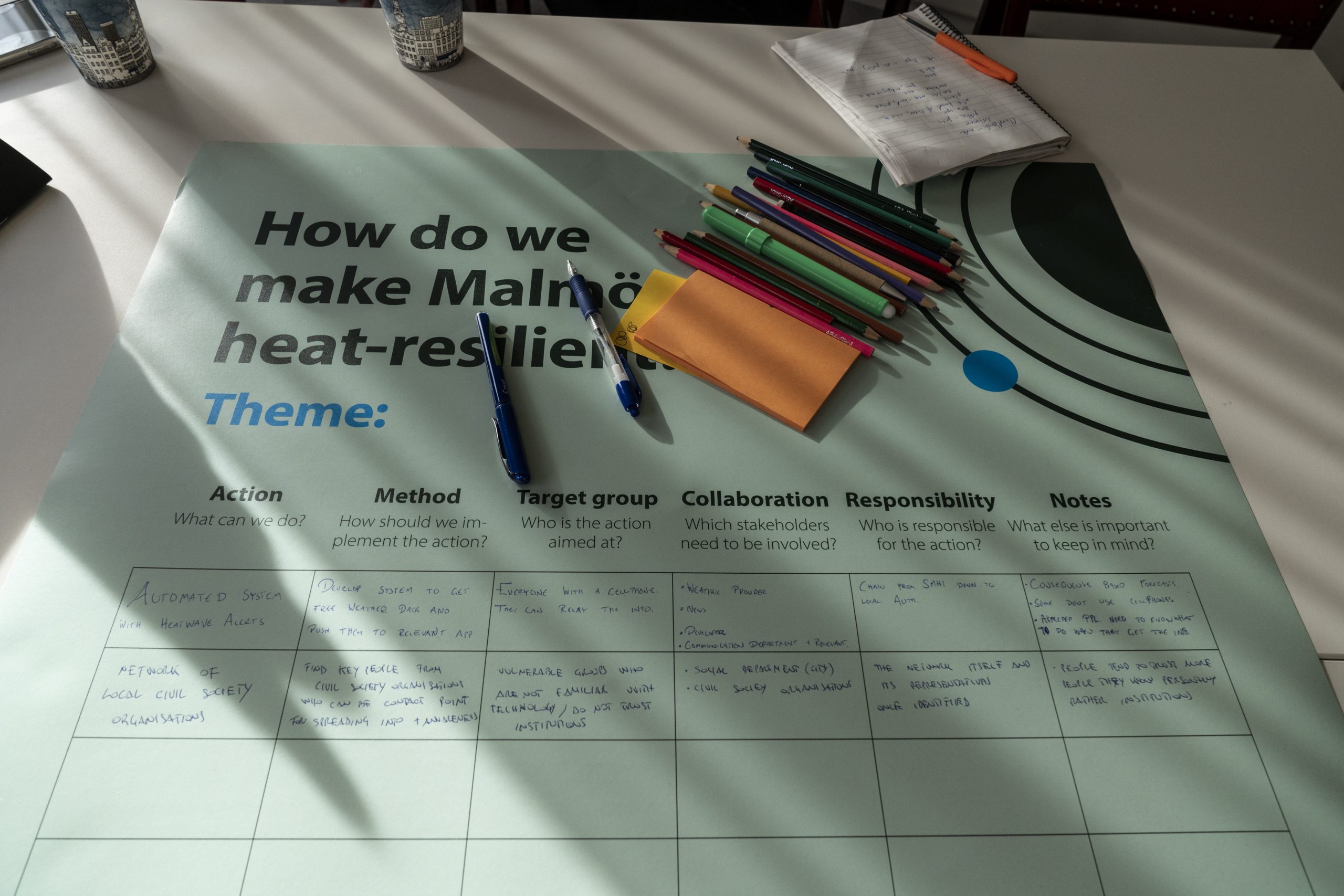
The end of 2024 marked an important milestone for Malmö, where the municipality published a politically backed report based on Adaptation AGORA project findings, “Extremvärme i Malmö: Vem drabbas och hur kan vi lindra effekterna?” (Extreme Heat in Malmö: Who is Affected and How Can We Mitigate the Effects?). The co-authored report is available only in Swedish and explores urban heat vulnerability. The report positions Malmö as a great example, inspiring other cities to follow suit. In January 2025, SEI HQ and the City of Malmö hosted a vibrant co-creation workshop focused on urban heat resilience, collecting the inputs from the previous phases of the engagement path and bringing outcomes to future initiatives. Nearly 40 participants from across city departments came together to break silos and confront the growing risks of heatwaves. The City of Malmö used the event to launch a new working group dedicated to integrating heat mitigation into urban planning. Presentations from local experts and external voices explored key questions: Who is most affected by heat stress? What have we learned through Adaptation AGORA? How can cities plan for a hotter future?
An interactive session followed, where participants co-developed practical solutions and assigned responsibilities. The results focused on four key areas:
- Nature-based solutions – Expand and care for green spaces to cool the city equitably.
- Indoor design strategies – Boost thermal comfort with shading, insulation, and new cooling tech.
- Knowledge exchange – Learn from other cities and build capacity across departments.
- Targeted communication – Reach the most vulnerable with clear, accessible heat-risk info.
Results
What We Learned from listening: Heat, Trust, and Everyday Resilience
In Malmö’s Rosengård, statistics might label the community as vulnerable, but reality is more complex. Residents cherish their neighborhood, enjoy the green spaces, and don’t always see heat as a major concern, unless it’s sweltering indoors. This revealed a key insight: vulnerability is not just data, it’s lived experience, and citizen engagement is essential to uncovering it.
Across all four Adaptation AGORA pilot regions, different groups brought different needs and perspectives:
- Youth in Malmö preferred reliable, decentralized communication (like transit displays or radio alerts) over participatory methods, reflecting strong trust in public institutions.
- Workers favored practical, low-effort formats, like in-situ sessions at workplaces or public alerts, highlighting a need for time-efficient, low-threshold engagement.
- Multicultural communities valued culturally rooted formats, such as storytelling, food, or art, making engagement feel personal and relatable.
- Outdoor workers leaned toward passive tools like local alert systems but remained skeptical of citizen-led initiatives, trusting formal institutions to lead in emergencies.

