

Context
Rome, the Eternal City. A story unlike any other in the world: iconic, unique, steeped in history. For centuries, it has stood resilient in the face of time. But can it rise once again, this time to meet the challenge of climate change? Can adaptation become a springboard for modernisation and a chance to improve the quality of life for all who live and visit here?
Rome, like many major metropolitan areas, faces mounting climate pressures. Heatwaves are no longer the exception but the norm, stretching across longer summers and testing the limits of residents and tourists alike. Managing water, both when it’s scarce and when it’s overwhelming, is becoming increasingly complex. From extreme weather events to the fragile coastal areas, and from the protection of a diverse population to the growing gaps between neighbourhoods, the challenges are as varied as the city itself. What affects one area of Rome might not affect another the same way. Some districts are far more vulnerable, and targeted action there is urgent.
But Rome, unlike its beautiful stone memories, is not standing still. The city has embarked on its climate adaptation journey with a dedicated local strategy. The first step was gathering solid scientific input from top research institutes, including the CMCC, coordinator of the Adaptation AGORA project. From there, the draft strategy was brought to life through a public participation process, supported by workshops and focus groups organized by the project. After hearing directly from the people of Rome, the adaptation strategy was fine-tuned and officially adopted by the City Assembly in January 2025.
Stakeholders
This pilot case study convened a wide range of stakeholders, including representatives from civil society, academia, the private sector, and non-profit organizations, to address the challenges outlined in the city’s initial adaptation strategy. The engagement process focused on ten key areas, from water management and urban infrastructure to cultural heritage, health, and biodiversity, pinpointing where Rome is most at risk. Stakeholders identified the city’s main vulnerabilities and needs, while also highlighting ways to engage citizens as crucial partners in shaping a successful adaptation strategy.
The Municipality of Rome
Rome approved its first Climate Adaptation Strategy in January 2025, setting priorities, goals, and measures to prepare the city for increasingly frequent and intense climate impacts. This process matched perfectly with the progress of the Adaptation AGORA project, where the Climate Office of the Municipality, represented by its Director, Edoardo Zanchini, has been the key partner in the Italian pilot.
Drafted in January 2024 after extensive research and scientific collaboration, the strategy went through months of public consultation, with workshops, local meetings, and citizen input helping shape the final plan. Adaptation AGORA workshops were part of this consultation process. The strategy focuses on four urgent challenges: heavy rains and floods threatening neighborhoods and infrastructure, water shortages from prolonged droughts, rising urban heat with health risks, and coastal erosion worsened by storms and sea-level rise. The strategy outlines concrete adaptation measures, responsibilities, costs, and funding sources, along with a monitoring system and annual updates to keep citizens informed and engaged.
Other public authorities
The engagement process also involved key public authorities, including the State Property Agency (Agenzia del Demanio) and the Lazio Regional Health Department (DEP Lazio). Their participation brought crucial perspectives to the discussion tables, enriching the debate with insights from their specific areas of responsibility.
The State Property Agency highlighted how climate change directly affects public assets and infrastructure, raising urgent questions about the resilience of state-owned buildings and the preservation of Italy’s vast heritage. Meanwhile, DEP Lazio shed light on the critical climate–health nexus, stressing the challenges of managing public health risks in a changing climate. A particular focus was on the growing threat of heatwaves in Rome, a metropolis that must not only safeguard its residents but also protect the millions of visitors it welcomes each year. By sharing their sector-specific expertise, these stakeholders helped connect climate impacts to tangible, real-world challenges, from safeguarding cultural and economic assets to ensuring the health and safety of citizens, making them essential partners in shaping a comprehensive adaptation strategy.
Civil society
Civil society associations played a vital role in the engagement process, bringing fresh energy, diverse perspectives, and a strong sense of community ownership to the discussions. The youth section of WWF Italy and the activists of Fridays for Future reminded decision-makers of the urgency of action, amplifying the voices of younger generations who will live with the long-term consequences of climate change. The Italian Red Cross contributed its experience in managing emergencies, underlining the importance of preparedness and rapid response in protecting vulnerable populations during extreme events. Equally important was the participation of migrant associations representing Rome’s multicultural communities, who emphasized the need for inclusive strategies that account for the diverse realities of those living in the city. Together, these groups helped ensure that the adaptation strategy was not only scientifically sound and institutionally robust, but also socially just, inclusive, and rooted in the values of solidarity and collective resilience.
Academia
Academia also brought a crucial contribution to the engagement process, represented by the University of Roma Tre, and in particular its Faculty of Architecture. Their expertise in urban planning offered valuable insights into how the city’s spaces can be reimagined to withstand climate pressures while remaining livable and inclusive. Beyond technical solutions, they stressed the importance of involving citizens in co-designing adaptation measures, ensuring that urban transformation is both participatory and responsive to the real needs of communities. By bridging scientific knowledge with practical urban strategies and citizen engagement, academia reinforced the idea that climate adaptation in Rome must be both evidence-based and deeply rooted in civic participation.
Challenges
In recent years, Rome has been experiencing an acceleration of climate change impacts, with rising temperatures and shifting rainfall patterns marked by long periods of drought followed by sudden, intense downpours. The city faces serious hydrogeological risks: rivers like the Tiber and the Aniene cut through its territory, leaving some neighborhoods highly exposed to flooding during heavy rains. This vulnerability is compounded by past unauthorized construction in areas that were never meant to be urbanized because of their proximity to rivers and flood risks.
Water management is another pressing issue. Rome has historically been blessed with an abundance of high-quality water, a legacy dating back to the Romans who built aqueducts to channel pristine water from the Apennines. But this long-standing advantage is under threat. Increasing droughts will make securing water supplies a top priority, requiring both investments in infrastructure and new approaches to reduce the use of drinking water, for example, by expanding the reuse of treated water, an area where the city is already investing heavily.
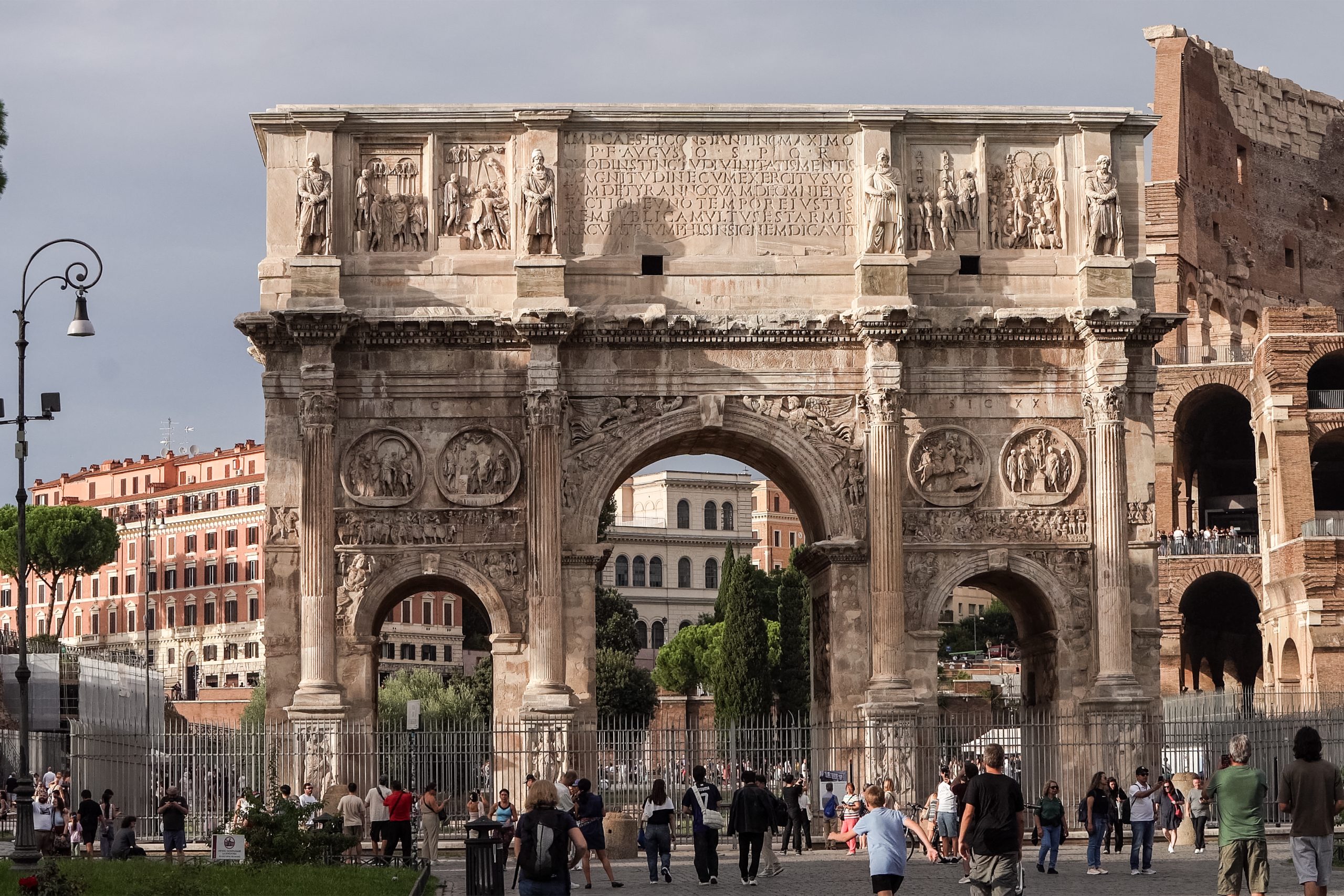
Rome also has 18 kilometers of coastline, where rising sea levels are beginning to take a toll. The challenge is to assess all these impacts, across neighborhoods, infrastructures, and landscapes, and to use data, research, and scientific studies to plan the city’s transformation. The goal is not only to make Rome resilient to climate change, but also to seize the opportunity to make it more modern, livable, and socially just, addressing long-standing inequalities in the process.
The greatest challenge lies at the neighborhood level. Public spaces need to be redesigned to be safer, cooler, and more welcoming, reducing climate risks while improving daily life for both residents and tourists. But Rome is a big and diverse city: depending on the area, temperature differences can reach 5–6°C between densely built-up, asphalt-heavy districts and those near large green areas or on the coast, where heat is naturally mitigated. These uneven climate impacts overlap with social inequalities, age, income, and other vulnerabilities, making some communities particularly at risk.
The city’s Adaptation Strategy estimates that around 9% of Rome’s population is at risk during heatwaves. Data clearly shows where action is most urgent: for instance, in the eastern districts, where green spaces are scarce. Here, environmental measures must go hand in hand with social, health, and communication strategies to protect and support the city’s most vulnerable residents.
Participatory pathway
1. General structure
The project’s four pilot areas served as testing grounds for inclusive, community-led climate adaptation. Starting in 2023, each area followed a structured participatory pathway: an inception workshop to map key stakeholders, engage different target audiences and decision-makers, and identify local barriers and vulnerabilities; followed by focus groups with specific populations to better understand their concerns and unique perspectives; and culminating in a final co-creation workshop aimed at developing actionable proposals and contributions to adaptation measures. The emphasis was on soft adaptation measures, non-structural, low-cost actions like public education and early warning systems, that address real community needs without heavy infrastructure.
In Rome, more than 100 stakeholders from public institutions, civil society, academia, and business were identified and engaged throughout the process. This approach bridged community insights with policymaking, laying the foundation for long-term impact.
2. Inception workshop
November 2023: The process began with an in-depth stakeholder mapping, identifying 42 key actors across government, academia, civil society, and the private sector. This wasn’t just about listing names, it was about ensuring diversity, gender balance, and inclusion of underrepresented voices from the start. The first big milestone was the organisation of the inception workshop, where the 30 participants mapped out vulnerabilities and gaps in Rome’s adaptive capacity, setting the foundation for collective action. To maximize accessibility, the event was hosted in a venue chosen with public transport challenges in mind, and all materials were designed to be visually clear and easy to understand. Participants were divided into small, interdisciplinary breakout groups and guided through structured discussions on climate vulnerabilities and adaptive capacity gaps across nine critical sectors in line with the adaptation strategy of the city of Rome, from water and infrastructure to health and cultural heritage. Using infographics and color-coded post-its, participants mapped out both sector-specific and cross-cutting issues, while trained facilitators ensured balanced dialogue. The workshop concluded with a dynamic table-to-table feedback round, allowing all groups to review and refine each other’s contributions. This marked the formal launch of the participatory pathway, anchoring it in both inclusivity and collective ownership.
3. Focus groups
Summer and Autumn 2024: The second step shifted from exploration to dialogue through a series of thematic focus groups. Workers, youth, multicultural communities, and health professionals. Each group brought different lived experiences and perspectives, from everyday workplace challenges to youth activism, public health concerns, and traditional knowledge from migrant communities. The sessions combined open dialogue with structured facilitation techniques such as Think–Pair–Share, the Nominal Group Technique, and 1–2–4-All. Participants first reflected on vulnerabilities and needs, then worked together to define priority “soft” adaptation measures, actions like awareness campaigns, education programs, or community-based early warning systems. A specially developed Citizen Engagement Card Deck helped participants evaluate which participatory methods (e.g. mentorship programs, citizen assemblies, peer-learning circles) could best support the implementation of the selected soft adaptation measure. This tool proved particularly effective in making the process accessible, even for participants unfamiliar with formal participatory mechanisms.
4. Co-creation workshop
January 2025: The final step brought the process full circle with the co-creation workshop, which took place in January 2025, just as the City of Rome officially adopted its first Climate Adaptation Strategy. The timing underscored how the participatory pathway had actively supported the city throughout the strategy’s development, creating direct links between institutional planning and citizen-driven contributions. A total of 44 participants came together to transform the priorities identified in earlier phases into concrete adaptation proposals. Working in six breakout groups supported by facilitators, participants revisited earlier findings on vulnerabilities and adaptive capacity gaps, then refined them into actionable measures. A dedicated set of visual cards and infographics synthesized the outputs from the focus groups, serving as prompts to guide discussion. Each group was asked to classify proposals into thematic domains such as communication, education, or both, ensuring clarity and coherence. Alongside these impact-related criteria, participants also assessed the practical feasibility of each approach, considering factors such as implementation costs, logistical accessibility, required skills, and the availability of institutional support. Following the group-based assessment, a final plenary discussion provided space for each group to present its insights and recommendations. The integration of tailored facilitation techniques, structured visual tools, and thematically focused prompts across all phases of the process ensured that each session yielded two interrelated outcomes: a shortlist of soft adaptation measures and a corresponding set of preferred engagement strategies to support their implementation.
By the end of the workshop, participants had produced a set of tangible, socially oriented adaptation actions, grounded in both scientific evidence and community experience. The workshop thus represented the culmination of the participatory journey: from mapping and listening to co-designing strategies that complemented and reinforced Rome’s newly adopted adaptation strategy, helping to ensure it is not only a technical document, but a living, inclusive, and community-owned pathway toward resilience. For more detailed information on the workshop, you can consult the dedicated report.
Participation was the key topic of a dedicated webinar of the peer-to-peer learning series. Participatory experiences were discussed involving also the Adaptation AGORA’s follower Friuli venezia Giulia Region.
Results
Education and community at the heart of climate adaptation
The engagement process in Rome showed a clear priority: education and community awareness are the cornerstones of climate adaptation. Participants agreed that schools, communities, and public spaces should be at the center of change.
A key proposal was to embed climate education in school curricula, supported by practical, locally relevant activities like workshops and field trips. This was seen as a long-term investment in future generations, enabling young people to become climate advocates within their families and communities. Beyond schools, participants stressed the importance of awareness-raising initiatives, from public events and campaigns to neighborhood consultations. When paired with effective communication, these activities were seen as essential for mobilizing broad participation. Other promising ideas included collaborative mentoring programs, to foster bottom-up involvement and ownership of adaptation strategies, and community skill-building workshops, especially in schools, offering low-cost, high-impact ways to strengthen local resilience.
Across all discussions, the reasons behind the preferences became clear:
- Long-term impact: school programs seen as investments in future generations.
- Inclusivity and accessibility: public events and consultations valued for their ability to involve diverse groups.
- Adaptability: mentoring and community workshops praised for tailoring solutions to local needs.
- Feasibility: preference for approaches that build on existing infrastructure (schools, public spaces) to minimize costs and maximize reach.
Participants co-created a final package of “soft” adaptation measures centred on education, awareness, and community engagement. This mix was considered the most effective pathway to strengthen Rome’s collective capacity to face climate change, combining the energy of youth, the inclusivity of public events, and the ownership fostered by participatory approaches.

