

Adaptation
Adaptation, a local and community affair
Adaptability has been integral to life on Earth since the beginning. Throughout Earth’s history, species have evolved and adapted to better survive their environment. In the short-term, we can see animals migrating to warmer climates in order to adapt to the changing seasons. Humanity must have the same spirit when it comes to dealing with the impacts of a changing climate, and adaptation plays a key and specific role in this.
Usually, climate change is talked about on a large-scale, with rising sea temperatures, extreme weather events, and melting ice caps. And while climate change is indeed a global issue, its impacts can be felt at the most local levels. Different regions experience different climate risks: some may face worsening floods while others experience crippling droughts. This calls for diverse solutions that are tailored to the geographical, cultural, and social aspects of local communities.

This important local feature of climate change reflects adaptation. Adaptation solutions can be tailor-made towards the different needs and vulnerabilities of a community. Adaptation, in human systems, is the process of adjustment to actual or expected climate and its effects, in order to moderate harm or exploit beneficial opportunities (IPCC – AR6 glossary). For climate change, it can mean using hard adaptation measures, like building stronger storm defenses, rethinking how we use our land, or redesigning infrastructure. Soft adaptation initiatives focus on non-structural solutions, like utilizing native plants, implementing water management strategies, and using early warning systems. Adaptation is learning to live in a different way, in a different world, constantly adjusting to new challenges.
Adaptation has a lot to do with local needs and resources, with territorial sustainable development plans, community thinking and collective action. Each locality and community has a set of specific needs and vulnerabilities when it comes to tackling climate change impacts. As such, adaptation has an intrinsic local component.
This is why citizen engagement within adaptation is so important. Applying adaptation solutions is about understanding how a community can change the way they live in their city, town or rural areas; the way they use information; the way they care for each segment of society, with a wide and inclusive approach. Understanding local climate impacts and barriers to climate adaptation can help with the ability of adaptation solutions to create meaningful impact.
Proper engagement within adaptation creates truly transformative climate adaptation and creates a feedback loop that promotes behavioral change. As engagement within climate adaptation goes up, climate solutions become more effective and promote adaptation behaviours in citizens, which causes increased support for local, community-led adaptation.
While engagement in adaptation is vital, many adaptation initiatives do not address critical issues within communities. Citizen engagement in climate adaptation can help bring critical issues to light and influence decision-makers and policies to address them within adaptation solutions. Citizen engagement is not only a democratic way to participate in decision making, but also a way to make decisions more effectively and direct the resources in a tailored way. To build meaningful citizen engagement, it is important to have clearly stated engagement objectives, involve a wide range of citizens, and tailor communication towards the specific audience involved.(D1.2)
Along with citizen engagement, capacity building is also an important feature of adaptation. It is defined as “the process by which individuals or organizations obtain, improve, or retain the skills, knowledge, tools, equipment, or other resources to do their work competently” (Climate-ADAPT). Simply put, capacity building improves the ability of a person or organization to complete their objectives. In climate adaptation, capacity building initiatives can help build risk assessment and resilience, empower communities and support social justice, and foster collaboration and knowledge exchange that further strengthen adaptation solutions.
Raising awareness on climate change and adaptation solutions is key. However, the spread of climate disinformation can hinder this. Disinformation can distort the public’s perception of climate change and its risks, can delay action, and affect people’s trust in science and the policy process. Engaging people in ways that respect their communication preferences can promote more knowledge uptake, and supporting local voices and organizations can help provide respected, trusted, and accurate knowledge that is locally relevant. Meaningful adaptation is not possible without public understanding and public awareness cannot flourish if it is clouded by disinformation. This is why engagement and capacity building go hand in hand when building climate adaptation initiatives, and why it is a major aspect of the Adaptation AGORA Project.
Climate change can feel like a complex and impossible problem, but adaptation provides us with solutions to not only live with the effects of climate change, but lessen these impacts as well.

Holistic approach
A holistic approach to adaptation
Addressing the complex challenge of climate adaptation demands more than just technical solutions, it requires bridging disciplines and integrating diverse forms of knowledge. While climate science provides essential insights into environmental risks and future scenarios, it’s social science that helps us understand how those risks are experienced, perceived, and managed by people and communities. Adaptation measures don’t exist in a vacuum. They unfold in real-world contexts shaped by social norms, economic inequality, political systems, cultural values, and individual behaviors. If we ignore these factors, we risk creating maladaptation, when well-intentioned solutions unintentionally increase vulnerability or create new risks. For instance, installing green infrastructure without ensuring equitable access can widen social gaps rather than reduce them. Social science helps us ask the right questions: Who benefits from this solution? Who is left out? What power dynamics are at play? How do we build trust and legitimacy in climate decision-making? These questions are critical for designing adaptation strategies that are not only effective on paper but also practical, inclusive, and just in practice. Moreover, integrating community knowledge, lived experience, and local values alongside scientific data fosters stronger public engagement and ownership, which are essential for long-term resilience. Interdisciplinary collaboration, between engineers, climate scientists, urban planners, sociologists, and community organizers, transforms adaptation from a technical fix into a collective process of social transformation. Climate adaptation is not just about adjusting to impacts, it’s about reshaping how we live together in a changing world.
The EU Mission on Adaptation to Climate Change focuses on supporting EU regions, cities and local authorities in their efforts to build resilience against the impacts of climate change. The Mission was born to complement climate mitigation and address the unavoidable effects of a warmer climate and to drive local communities to be better prepared to cope with those effects. The Mission aims to accompany at least 150 communities to climate resilience, through understanding climate risks, developing pathways for preparation, and implementing innovative solutions by 2030.
The EU regions and cities play a key role in the Mission, as the frontrunners finding and experimenting innovative solutions to local challenges and needs. Regional and local authorities that share the ambitions of the Mission can sign the Mission Charter to join. By doing so, they express their willingness to cooperate, mobilise resources and develop activities in their respective areas and communities to reach their adaptation goals. The number of signatories of the Chart already overcame 300 regional and local authorities.
The Mission funds various projects that focus on adaptation, like the Adaptation AGORA Project. Efforts from the EU Mission on Adaptation have produced a wide variety of adaptation tools and resources that address various aspects of climate adaptation, like capacity building, citizen engagement, and case studies that highlight successful adaptation solutions. For example, the Regional Adaptation Support Tool (RAST) supports local and regional authorities with climate adaptation strategies. The tool guides users through the adaptation process, starting with development and ending with monitoring and evaluation. Within the Adaptation AGORA Project, the RAST tool was used in various adaptation and engagement activities (D5.1). Along with the RAST Tool, the EU Mission also provides do-it-yourself (DIY) manuals for citizen engagement that explain what participation tools to use with each of the RAST Tool steps.
The EU Mission on Adaptation to Climate Change represents one of the many inter-regional efforts in Europe to address the climate crisis.

Citizens do care about climate challenges
Climate change remains among the top three concerns of Europeans. An overwhelming majority support action across the EU to tackle the climate crisis and make Europe the first climate-neutral continent, according to the latest Eurobarometer survey by the European Commission.
Among the main results of the survey:
- European citizens identify climate change as the third most serious problem facing the world after poverty, hunger and lack of drinking water, and armed conflicts.
- 88% of respondents – and at least 70% in each Member State – agree that greenhouse gas emissions should be reduced to a minimum while offsetting the remaining emissions for a climate-neutral EU economy by 2050.
- More than nine in ten respondents (93%) have taken at least one specific action to fight climate change, most notably by reducing and recycling waste (70%) and cutting down on consumption of disposable items whenever possible (53%).
These data are encouraging and confirm the importance of involving local communities in climate action, as they show a high degree of care and commitment to the topic already in place in many European regions. Citizen support of climate solutions helps build community resilience and puts pressure on decision-makers to implement effective and widespread policy.
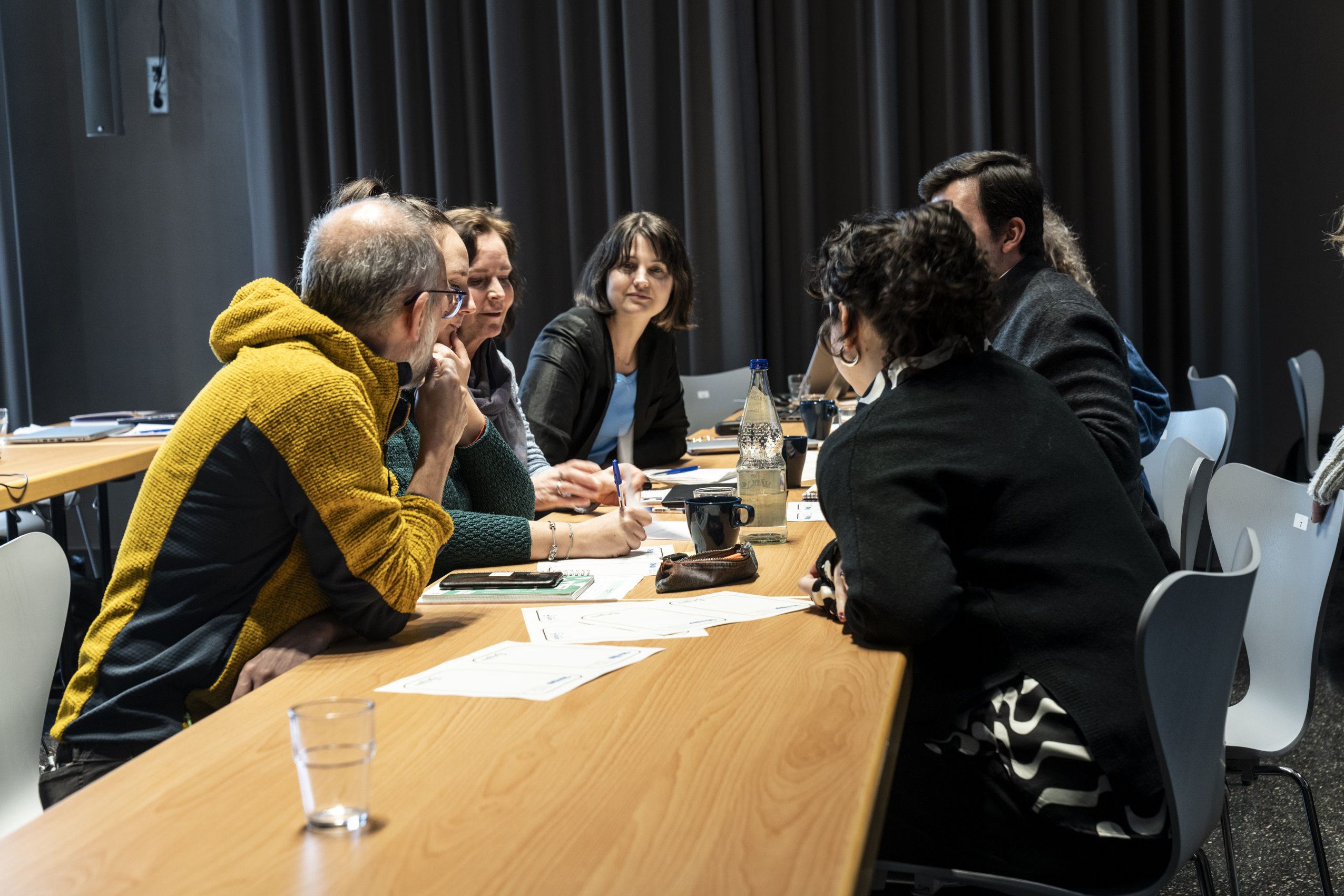
circle of climate movement
From knowledge to action, the circle of climate movement
There is great power in individual action, but it can be difficult to know where to start. There are a few key elements to having meaningful and successful climate participation. First, you must have concrete knowledge of your area and what local climate impacts are most affecting your community. You can get informed by making sure you are getting accurate scientific information and data, through your local institutions, climate organizations, or credited climate resources, like the Adaptation AGORA Digital Academies. Being informed sets you up for providing the most accurate insights into adaptation solutions.
Once you have that knowledge, you can inform others, through volunteering, or even just by having conversations with your family, friends, and community members. Raising awareness among your community can spark further participation. Informing your community also means letting local policy and decision-makers know you’re aware and ready to take action. This is one of the best ways to begin change.
After informing your community and local authorities, you can participate in co-planning adaptation solutions and initiatives. Co-production means collaborating with researchers, policy and decision-makers, and the public to create comprehensive solutions. This step allows people from all sectors of a community to come together and provide information, insights, and personal knowledge that will create comprehensive adaptation solutions. Co-production feeds into the next step, decide. All the knowledge and data created during the previous steps helps create informed decisions on the most effective adaptation solutions and policy decisions for a community.
Meaningful climate participation begins with you! Understanding the science and data of your area gives you the resources to build awareness in your community, engage in co-planning, and help build effective adaptation solutions and policies.


